
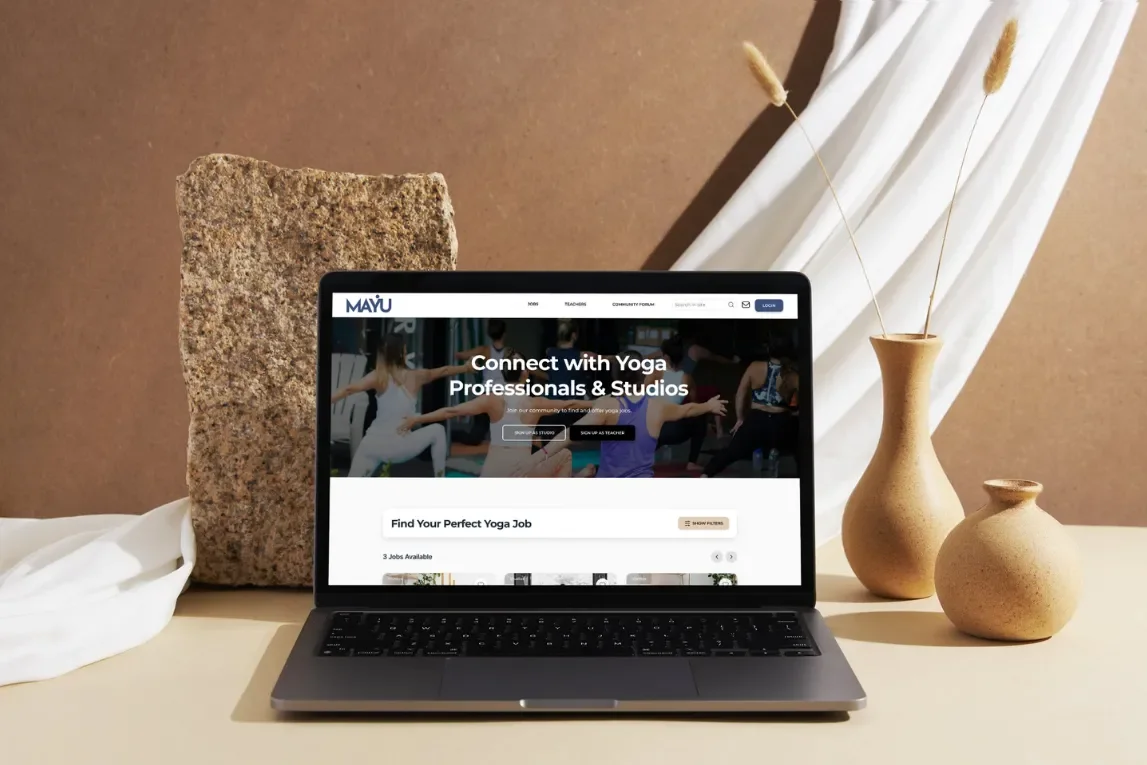
Mindful design meets niche recruitment.
Role: Lead UX/UI & Product Designer (End-to-End)
Timeline: 8 Weeks (AllWomen UX/UI Bootcamp Project)
Tools: Figma, Google Forms, Google Meet
Scope: Research, Wireframing, Usability Testing, UI System
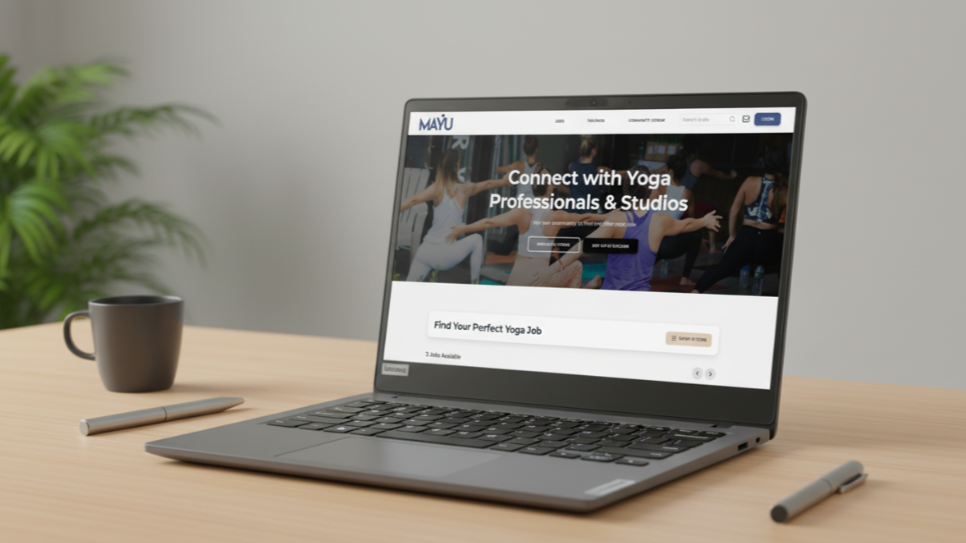
The Mission
Designing a Mindful Hiring Ecosystem
For my individual project at AllWomen, I tackled the friction of traditional "cold" hiring within niche communities. Using the yoga industry as a case study, I designed a digital bridge of trust that connects teachers and studio owners. The project focuses on creating perfect cultural matches by embedding transparency, presence, and professional integrity directly into the user experience—proving how thoughtful digital design can solve real-world recruitment challenges.
Uncovering the “Trust Gap”: Why 61.8% of Hiring Relies on Referrals While Studio Owners Suffer Severe “Time Poverty”
62+ Research participants (11 interviews + 51 survey respondents)
61.8% Of yoga hiring relies on word-of-mouth
44.4% Of studio owners have no time to vet cold applications
100% Usability test success rate on the new filtering feature
Design Process
Empathize — Uncovering the Trust Gap 11 interviews and 51 survey responses revealed that 61.8% of yoga hiring happens through word-of-mouth — and studio owners are too time-poor to vet cold applications.
Define The real problem wasn't a lack of job listings — it was a lack of trust. Studio owners needed to see a teacher's "vibe" and reliability before committing time to a trial lesson.
Ideate I explored ways to replace static resumes with something that shows presence — landing on a 60-second video pre-interview as the core trust signal.
Prototype Built low-fidelity wireframes around a scannable digital profile: certifications, teaching style, and real-time availability, instead of a generic document upload.
Test Moderated usability testing with 5 participants surfaced a real problem: most users ignored the main "Browse Jobs" button and went straight to the nav bar instead.
Iterate Removed the redundant CTA, elevated the Quick Actions block, and unified navigation — a direct response to what testing showed, not a guess.
The Name: A Sanctuary for Growth
Derived from the Japanese word for "Cocoon," MAYU represents a protective, nurturing space. I designed this platform to eliminate application bureaucracy, allowing teachers and studio owners to focus entirely on the practice and community of yoga.
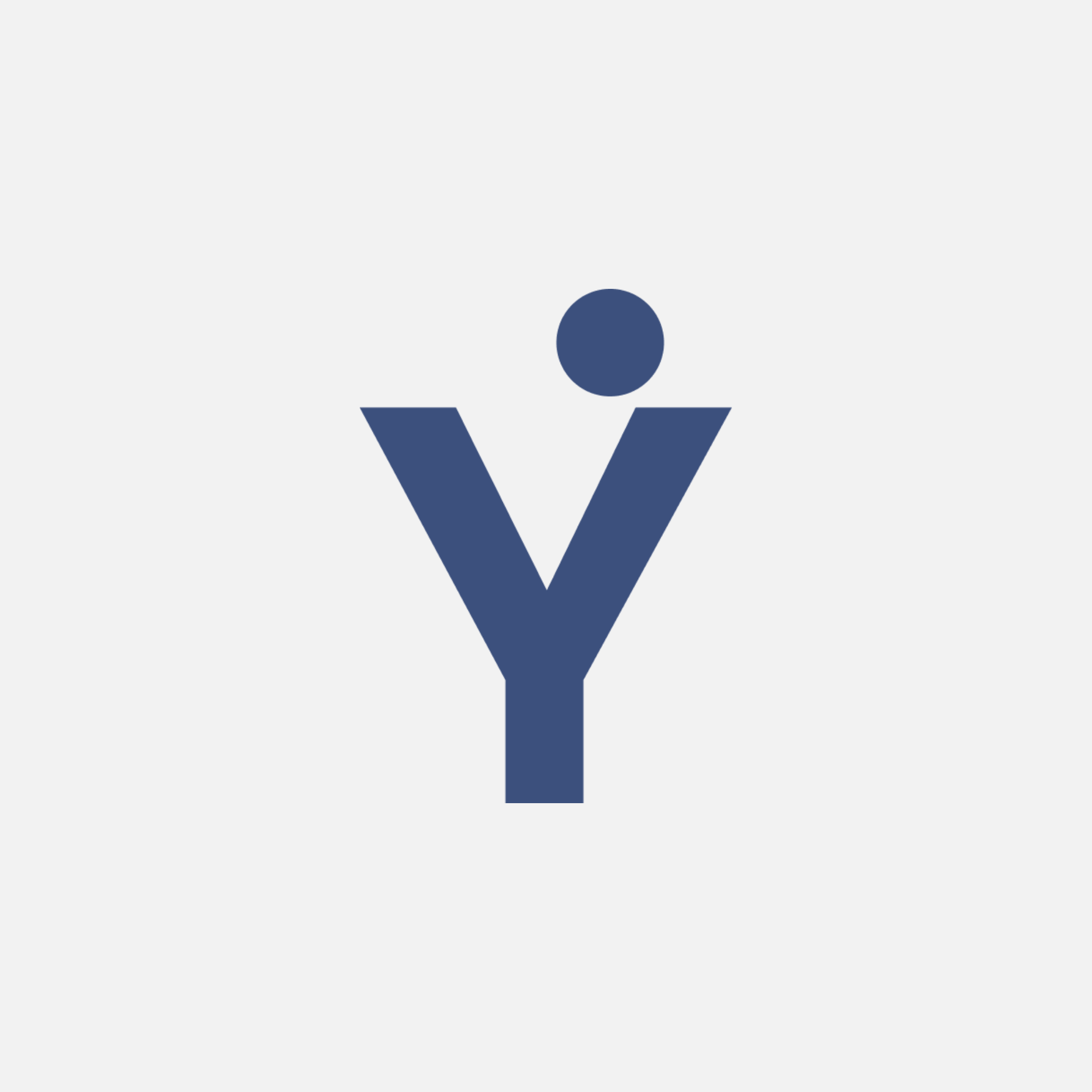
The Symbol & Favicon: Heart-Opening Connection
The logo's "Y" forms a minimalist silhouette of Natarajasana (Dancer’s Pose). Mirroring the pose itself, the icon represents opening the heart to new opportunities and the delicate balance between a teacher’s talent and a studio owner’s vision
→ Color & Type: Deep royal blue for trust and stability, paired with soft cream for warmth — with clean, legible sans-serif type built for fast scanning of credentials and schedules.
The Solution
MAYU: Reimagining Wellness Recruitment Through a "Vibe-First" Lens
Traditional hiring platforms often fail niche industries like wellness, where cultural alignment matters just as much as a resume. MAYU solves this by digitizing professional trust and authentic teaching styles to unite the yoga community. By transitioning the industry away from rigid applications and toward a "vibe-first" marketplace, the platform allows studio owners and instructors to connect on a deeper level. It proves how thoughtful digital design can preserve human connection while introducing modern, marketplace efficiency.
The comprehensive Business Plan, Financial Projections, and Interactive Prototypes are available for strategic review upon request.
Impact / Next Steps
Validated a real trust gap in a niche, underserved hiring market through 62+ real users
Usability testing directly shaped the final navigation and filter design, not just the visuals
Roadmap: studio-side applicant tracking, a monetization model, and scaling from single-city to regional networks